
Functional seizures are real, involuntary episodes that can affect awareness, movement or a person’s ability to respond to their surroundings. They can look similar to epileptic seizures, but they are not caused by the epileptic electrical activity seen in epilepsy.
Some people have both functional seizures and epilepsy. NHS inform describes some common experiences, including shaking, becoming still and unresponsive, or staring without responding.
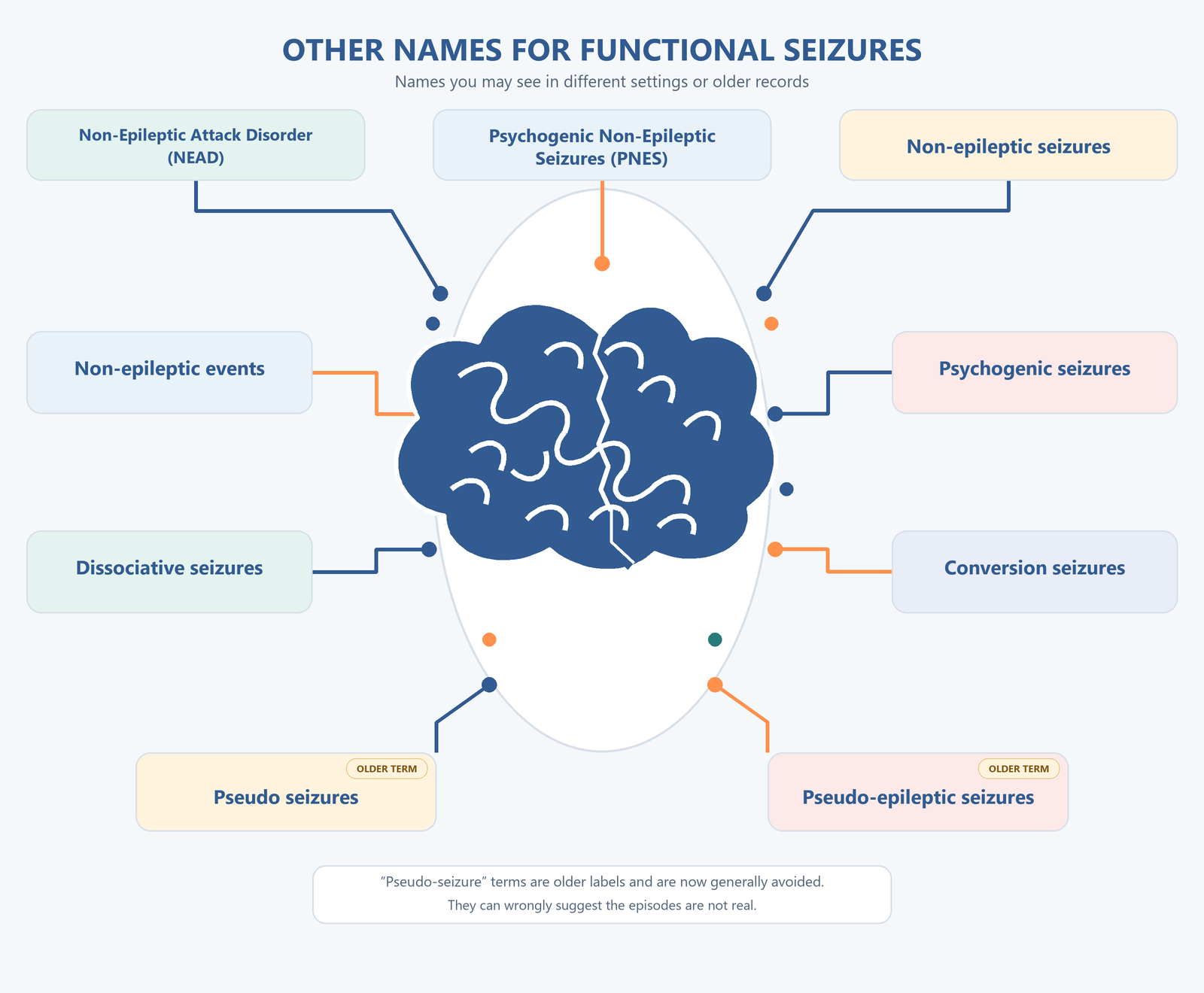
You may see different names for functional seizures, including dissociative seizures, non-epileptic attack disorder (NEAD) and psychogenic non-epileptic seizures (PNES). Older records may use terms such as “pseudoseizures”. That term is now generally avoided because it can wrongly suggest that the episodes are imagined or deliberately produced.
What causes them?
No single explanation applies to everyone. Functional seizures are not simply a response to stress, and a person does not need to identify a traumatic event or emotional trigger to have them. Stress, emotions, pain, sensations or other circumstances may be relevant for some people, but experiences and patterns differ. The reasons can be complex, and we don't fully understand all the mechanisms.
It may help to notice what happens before or around an episode, if you can do so without adding pressure or blame. A clinician can help you consider whether any patterns are useful for your individual care.
How are functional seizures diagnosed?
Because functional seizures can look like epileptic seizures, assessment by a clinician with expertise in seizures is important. A neurologist may ask you and, if you agree, someone who has witnessed an episode to describe what happens. A video of a typical episode may also help. The clinician will use the overall history and assessment to consider whether episodes are epileptic seizures, functional seizures, fainting or something else. Sometimes an EEG or other tests are needed. NHS inform Neurosymptoms.org
A diagnosis should not be based only on a normal scan or test. Functional seizures can also occur alongside epilepsy, so it is important that the assessment considers the person’s full situation.
Treatment and medication
Treatment should be discussed with your clinical team and tailored to you. Clear information about the diagnosis is an important starting point. Some people may be offered psychological therapy, which can help them understand their episodes and work on ways to manage them. This does not mean the seizures are imagined. What is helpful can vary from person to person.
Anti-seizure medication does not treat functional seizures on its own. However, it may be prescribed for another reason, such as co-existing epilepsy or a different health condition. Do not stop or change prescribed medication by yourself. If you take anti-seizure medication, ask the clinician who prescribed it what it is for and whether it remains appropriate for you. If a change is recommended, your clinician can advise how to do this safely.
A note about this information
This article is for general information. It does not replace an individual assessment, medical advice or a personalised care plan. If your episodes are new, have changed, or you are unsure what is happening, seek advice from a healthcare professional.